
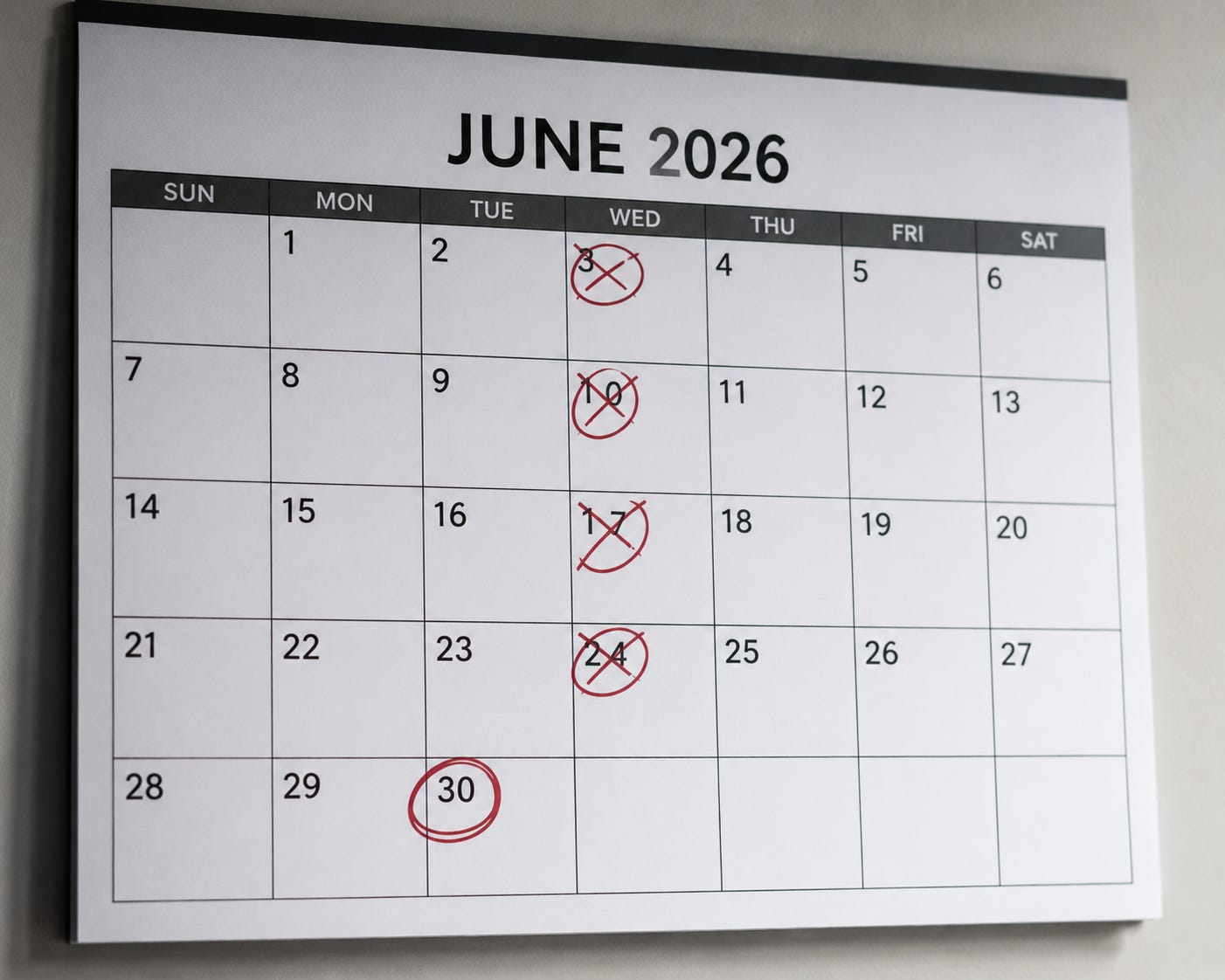
You know the one.
You’ve known about it for a while. It pops in your head during the pre-shift, during the drive home, during the quiet moments of a slow night when there’s nothing else demanding your attention. You’ve rehearsed versions of it. You’ve thought about how she might respond, what you’d say next, whether it would go well or badly. You’ve decided to have it at least three times and then found a reason not to.
It’s not that you don’t care. You do, and that’s precisely why it’s uncomfortable. You care about the person, you care about the outcome, you care about doing it right. But somehow that caring has become the thing that keeps you from starting.
I had one of those conversations once that I waited on for five weeks. Five weeks of watching the same pattern repeat, telling myself it would resolve, adjusting coverage around it, and privately becoming more frustrated with every shift that passed without anything changing. By the time I finally had it, the situation had escalated from something I could have addressed in fifteen minutes to something that required HR involvement and documentation. What could have been a coaching conversation had become a formal performance process.
The person on the other end deserved to have been told sooner. So did my team, who had been compensating for the problem while I waited for the right moment. The right moment, as it turned out, had been five weeks ago.
You Already Know
The most important thing to understand about the conversation you keep postponing is that you already have what you need to have it.
You have the observation. You’ve seen the pattern—the attendance, the quality, the attitude, whatever it is—play out enough times that there’s no longer any doubt about whether it’s real. You have the impact. You know what it’s costing the team, the operation, the standard you’re trying to hold. You even have a general sense of what you want the outcome to be.
The only thing you don’t have is certainty about how it will go. And that uncertainty, the possibility of a defensive reaction, of tears, of denial, of making things worse, is the thing that feels like a reason to wait.
It’s not a reason to wait. It’s the nature of the conversation. The uncertainty doesn’t disappear if you wait another two weeks. It just gets packaged with a larger problem.
Seventeen Reasons to Wait
You probably recognize some of these.
She just came back from leave. This isn’t a good time. The timing never feels ideal, and there will always be a reason that this particular week is slightly worse than next week.
I don’t have enough specific examples yet. You have three from the last month. You’re waiting for a fourth so you feel more prepared. The fourth arrives, and you decide five would be better.
He seemed to be doing better this week. One good shift shouldn’t reset the conversation. You know that. But it gives you permission to wait, and you take it.
I need to give her a chance to turn it around on her own. She’s had that chance. Several of them. The pattern continues because nothing has clearly communicated that it needs to stop.
It’ll create awkwardness on the floor. The awkwardness already exists. It exists in every shift where the standard applies to nine people and doesn’t apply to one. You’re the only one pretending otherwise.
I don’t want to damage the relationship. The relationship is already being damaged by the absence of honesty, by the gap between what’s happening and what’s being said, by the slow erosion of trust your team has in a manager who sees something and says nothing.
Each of these feels like a legitimate reason in the moment. Laid out together, they’re a list of rationalizations that share a single function: they let you wait one more shift, one more week, one more month, without having to acknowledge that you’re waiting.
What the Delay Is Costing
Ten years ago I heard a principle that has stayed with me: “Easy choices, hard life. Hard choices, easy life.” The postponed conversation is the easy choice that makes the longer game harder for everyone involved.
For the person at the center of the conversation: every week you wait is a week they operate without honest information about how they’re being perceived. They may have no idea there’s a problem. Or they may suspect something is wrong but can’t address it because it hasn’t been named. Either way, they’re working in the dark and that’s not fair, however uncomfortable it is to say so.
For the team: they can see what you can see. The associate whose attendance has been inconsistent, the team lead whose quality has been slipping, whatever it is, the people working alongside them know. And what they’re also watching is how you respond to it. Every week you don’t address it is a week they get a data point about what the standard actually is around here, and whose behavior is subject to it.
For your own credibility: the longer you wait, the harder the eventual conversation becomes. By the time you have it, you’re not just addressing a performance issue. You’re accounting for the gap between when you first saw it and when you said something. That gap matters. People notice it. It shapes how they experience the conversation and how much they trust that your management of them is honest.
As I wrote in Creating Accountability Without Constant Oversight, accountability that only lands when a problem is unavoidable isn’t accountability, it’s crisis management. The conversation you keep postponing is a place where that distinction becomes very real, very fast.
The Myths That Keep You Waiting
There are a few deeper beliefs worth examining because they sound more legitimate than “I’m uncomfortable” but are doing the same work.
The first is the evidence myth: I need to have all my evidence ready. You need enough specific, observable examples to make the conversation factual and grounded. You don’t need a case file. Two or three clear instances with dates and impacts is sufficient. The search for more evidence is often a search for a confidence or comfort that the evidence was never going to provide.
Closely related is the composure myth: I should wait until I’m calm. There’s a version of this that’s true. You shouldn’t have the conversation in the immediate heat of frustration. But calm can become indefinitely delayed very quickly. If you’re consistently too frustrated to have the conversation, that’s worth examining as its own issue. Mild discomfort isn’t the same as being too emotional to proceed.
Then there’s the resolution myth: maybe it will resolve itself. Occasionally it does. Mostly it doesn’t. And the version of the problem that resolves itself is almost always smaller than the version you’re currently looking at. If the issue has been present for more than two weeks, waiting for spontaneous resolution is optimism at the team’s expense.
Finally: I’m not sure how to start. This one is actually solvable, and the next section addresses it directly. But notice that this reason usually arrives late in the rationalization process: after the timing, the evidence, and the possibility of self-correction have all been exhausted. Not knowing how to start is a logistics problem. The others are avoidance masquerading as judgment.
What “Ready Enough” Actually Looks Like
Ready enough is:
You can describe the specific behavior in observable terms: what you’ve seen, how often, with what impact on the operation or the team.
You have a clear sense of what you want to be different after the conversation. Not a vague hope for improvement, but a specific change that would tell you things had shifted.
You’ve chosen a time and place where the person has some privacy and the conversation won’t be interrupted mid-sentence by a radio call or a shift handover.
That’s it. That’s ready enough.
You don’t need to have anticipated every possible response. You don’t need to have planned a rebuttal for every objection. You don’t need to have scripted it word for word. Those preparations can be genuinely useful; the Difficult Conversations Planner walks through exactly this kind of structured preparation. But the absence of them isn’t the reason you haven’t had the conversation yet. The reason is the one we’ve been discussing.
Ready enough is almost always available sooner than it feels like it is.
The First Sentence
The hardest part of the conversation is starting it. Once it’s underway, the momentum carries you. The silence before the first sentence is where most of the delay lives.
In my experience, the openings that work best in an operational environment are short, direct, and non-accusatory. They state the purpose without editorializing. Something like:
“I’ve been wanting to talk with you about something I’ve been observing, and I want to do it while I still have a chance to be helpful.”
Or:
“There’s something I’ve been watching over the last few weeks that I want to discuss with you, because I think it’s important and because I respect you enough to say it directly.”
Both of these do something specific: they frame the conversation as one the manager is having because they care, not because they’ve run out of other options. That framing matters. The person on the other side of the conversation picks up on whether they’re the last resort or the first response. After five weeks, I was the last resort. The conversation I should have had in week two would have been the first response — and it would have landed very differently.
From the opening, the conversation follows a structure worth preparing for: what you observed, the impact it had, a genuine question about what’s going on from their side, and a clear picture of what needs to change. All of that is covered in detail in the Difficult Conversations Planner for Manufacturing Leaders, which exists precisely for this purpose.
The article you’re reading is about getting you to the first sentence. The planner will help you with what happens next.
Summary
The conversation you keep postponing probably isn’t as complicated as it feels from a distance. What’s keeping it in the future isn’t a lack of information, a lack of preparation, or a lack of opportunity. It’s your preference for avoiding discomfort and the cost that preference is imposing on everyone else.
The person at the center of it deserves to know. Your team deserves to see you act on what you can see. And your own credibility as a manager depends, in part, on the gap between when you notice something and when you say something being as small as possible.
Ready enough is closer than it feels. The first sentence is shorter than the one you’ve been rehearsing. And the conversation, almost always, goes better than the version you’ve been running in your head.
The right time to have the conversation you’ve been postponing was probably two weeks ago. The second-best time is before the end of this shift.
From Theory to Action
Name the conversation you’ve been avoiding. Specifically. Write it down if that helps: who, what pattern, how long. Getting it out of your head and into a sentence is the first step toward having it.
Calculate the cost honestly. How long have you been aware of this? What has it cost the team in that time? In coverage, in morale, in the resentment that comes from watching a standard applied inconsistently? What has it cost the person, who has been operating without honest feedback? Write that down too. The discomfort of the conversation usually shrinks when it’s placed next to the cost of postponing it.
Set a deadline, not a plan. Don’t decide that you’ll have the conversation when the time feels right. Decide that you’ll have it before the end of the week, or before a specific shift, or before a specific date. A deadline with a consequence creates a different kind of urgency than “soon.”
Prepare the first two sentences. Just the first two. Use the opening frameworks from this article or develop your own, but write out how you’ll start. Practice saying them out loud once. The hesitation lives before the first sentence; once you’ve said it out loud, even alone, it becomes a thing you’ve done rather than a thing you’re about to do.
Use the Planner. The Difficult Conversations Planner for Manufacturing Leaders is the companion tool to this article. It walks through preparation, framing, listening, and follow-up in detail. Once you’ve committed to having the conversation, the planner gives you the structure for making it productive. Download it, fill in the relevant sections, and take it with you if it helps. Most people find that the preparation process alone, working through the specifics of what they want to say, significantly reduces the anxiety around the conversation before it even begins.
Debrief yourself afterward. The conversation will not go exactly as you planned. It never does. When it’s done, give yourself ten minutes to think through what happened: what you said, how they responded, what you’d do differently. That reflection, practiced consistently, is what builds the skill. The first difficult conversation you have will feel harder than the fifth. The fifth will feel harder than the twentieth. They don’t stop being uncomfortable. They stop being paralyzing.
Devin —
You named five weeks watching the same pattern—adjusting coverage around it—until a coaching talk became an HR process. That's mid hard-conversation practice — not a found-tribe essay.
I'm Sean. FloScope.life hosts a Life Mastery Society practice group (ECC & LMN™) — for people still building the muscle to say the hard thing.
Start 7-day trial → https://floscope.life (then Basic $2.99/mo).
Lab 1 Tue 29 Sep 1–3pm ET · https://FloScope.life week free
Sean Claesgens
FloScope.life